Human Identity, Culture & Cognition

When Mortality Becomes Real

Drift Corrects in a Hurry

Chris Ciappa· February 16, 2026· 4 min read

When Mortality Becomes Real

Drift Corrects in a Hurry.

Member article

Full article access requires Synth Membership

This article is available to Synth members. Membership is $50 per year and unlocks member articles through your Samirac account.


Continue reading

Related work

Browse all →
Portal Between Chaos and Clarity

Are You Adaptable Enough to Survive?

We live in a world where credentials, institutional authority, and popular opinion are too often mistaken for truth. But reality doesn't change to accommodate what we believe. This article explores how pattern recognition, evidence, probability, and intellectual adaptability shape our understanding of the world—and why the same principles must be built into AI systems. It also examines how the SAMIRAC architecture addresses changing conditions, system drift, and execution control.

Elon Musk pictured alongside industrial robotics, stock ownership imagery, and American families, illustrating the shift from human labor toward broad-based capital ownership in an automated economy.

When Machines Replace Workers, Workers Should Become Owners

As artificial intelligence, robotics, and automation replace human labor, millions of workers risk losing their economic independence while the companies deploying those technologies continue benefiting from increased productivity. What if displaced workers became owners of the capital replacing their labor instead of depending on universal basic income? I examine a different approach to automation, income replacement, productive ownership, and the future of economic participation.

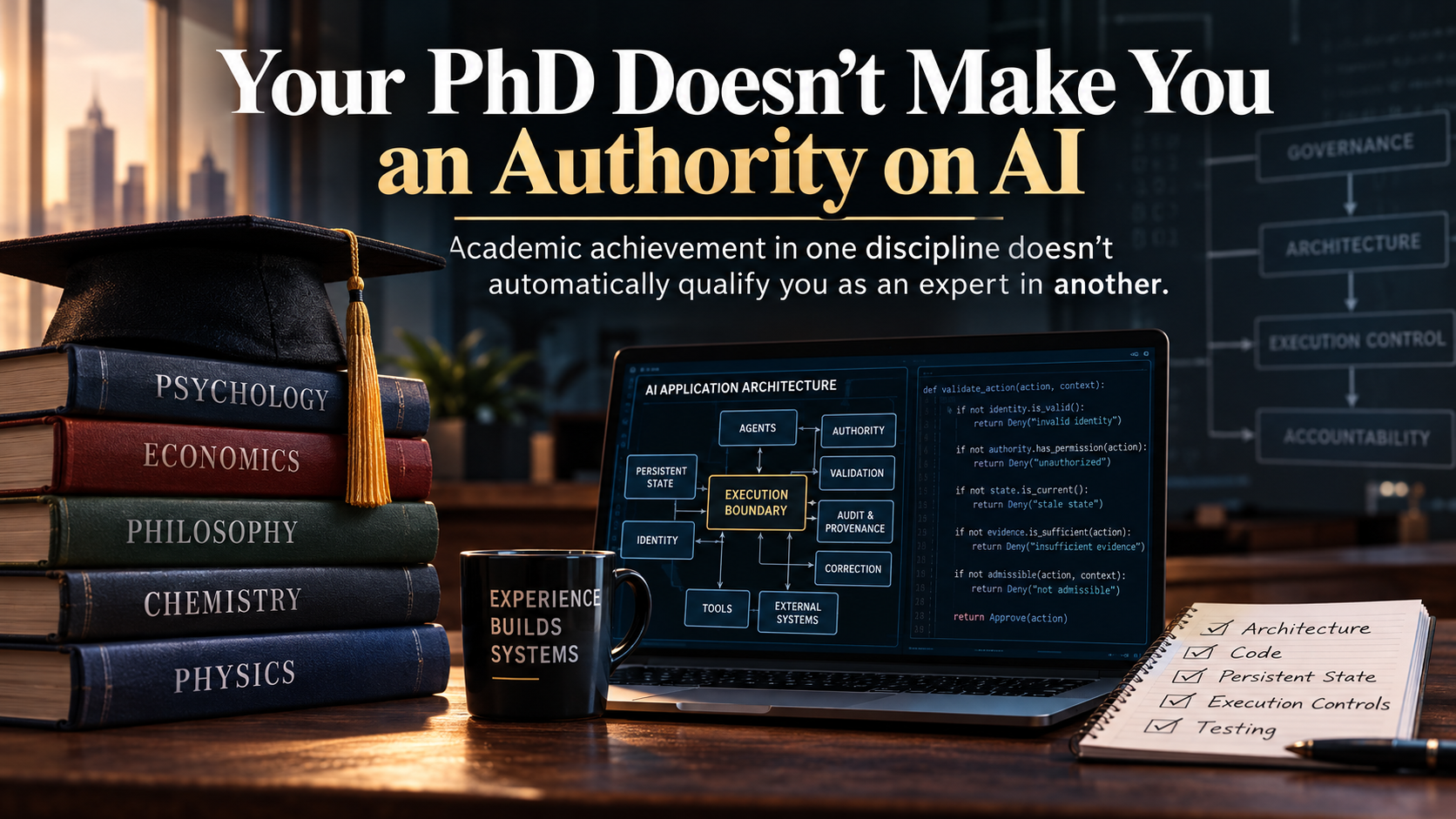
Your PhD Doesn't Make You an Authority on AI

Your PhD Doesn't Make You an Authority on AI

A PhD represents advanced knowledge in a particular discipline, but it doesn't automatically confer expertise in AI systems engineering. We examine the growing tendency to mistake academic credentials for architectural competence, particularly among those making authoritative claims about systems they've never designed, built, or examined. Understanding AI models is one thing. Understanding the architecture that makes them operate is quite another.