Media Drift: How Upstream Ideology Rewired Journalism and Led to Enforcement Culture
Chris Ciappa· December 6, 2025· 6 min read
By the time journalists reached their desks, the drift had already taken place upstream.
Most people believe media decline began inside the newsroom. It didn’t.
By the time journalists reached their desks, the drift had already taken place upstream.
Journalism inherited a worldview that had been reshaped years earlier—through educational pipelines, teacher-training programs, and the rise of emotion-first reasoning in academia. Media drift is a downstream effect, not a root cause.
Before someone becomes a journalist, they pass through institutions that shape:
what “truth” means
which narratives are moral
how harm is defined
how identity relates to power
whether objectivity is valued or rejected
whether feelings outweigh facts
By the time they arrive in media, the worldview is already formed.
Journalism didn’t break truth. It inherited a broken definition of truth.
2. The Mission of Journalism Quietly Shifted
Traditional journalism saw its purpose as:
Report facts. Expose contradictions. Present information clearly.
Drift-era journalism quietly adopted a new mission:
Protect the narrative. Avoid cognitive dissonance. Frame reality in moral terms.
This shift explains the rise of:
selective reporting
emotional headline framing
narratives that override evidence
moral storytelling replacing factual analysis
coordinated talking points across outlets
This isn’t strategic deception. It’s a worldview that treats narrative as a moral duty.
3. When Truth Becomes Secondary, Power Fills the Vacuum
Once a society embraces the idea that “truth” is a moral stance rather than an objective fact, the next step follows naturally:
dissent is reframed as harm
disagreement becomes dangerous
contradiction becomes “misinformation”
alternative frames become destabilizing
And when “harm” and “danger” enter the picture, enforcement becomes morally justified in the minds of institutions.
This is how societies begin policing speech, punishing opinions, and regulating thought.
Not out of malice— but out of a drifted worldview that confuses disagreement with violence.
4. Drift Cannot Tolerate Anchors
In any drifted environment, external reference frames are treated as threats.
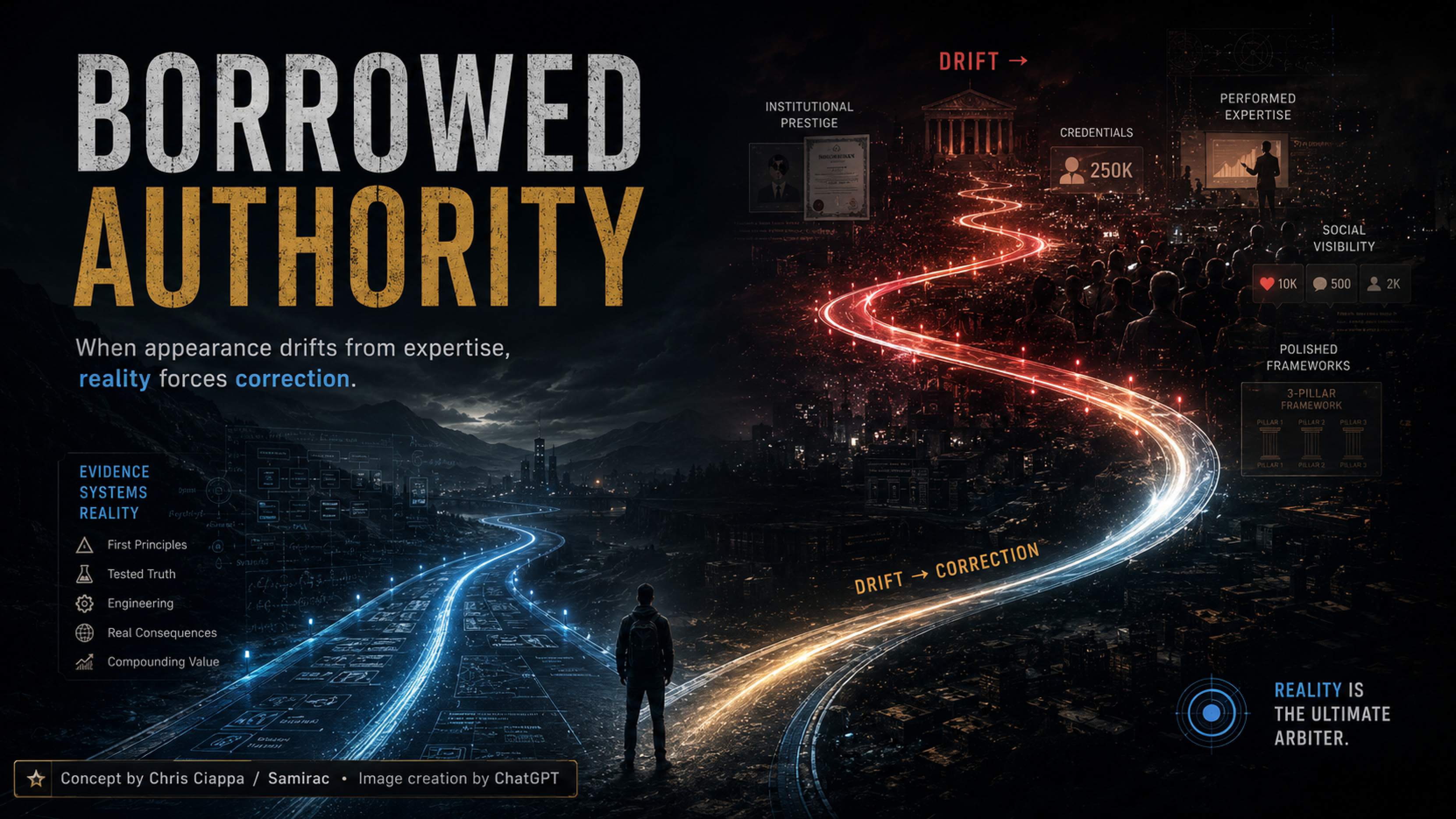
Anchors—individuals or ideas that resist the dominant narrative—disrupt control of interpretation. Anchors expose drift. Drifted institutions cannot allow that tension to exist.
So enforcement escalates.
This is why the cultural environment increasingly treats alternative viewpoints as extremism. Not because those viewpoints changed—but because the interpretive frame around them drifted.
5. The EU’s AI Banned List: A Case Study in Drift Response
The European Union recently banned eight AI use cases outright, including:
Social scoring
Emotion recognition in workplaces
Exploiting psychological vulnerabilities
Real-time public biometric ID
Behavioral manipulation
Untargeted facial scraping
Predictive policing
Biometric categorization using sensitive traits
On paper, these rules appear to be about safety. But the deeper issue is power asymmetry.
A drifted society attempts to regulate away the consequences of lost coherence by restricting any technology that amplifies informational or psychological control. Instead of restoring anchors, it constrains the tools.
The irony is obvious: The same moral architecture that justifies protecting citizens from manipulation also justifies punishing citizens for speech.
This is the tightrope Europe is now walking—balancing legitimate concerns about power with an increasingly drifted framework for evaluating “harm.”
Not a conspiracy. Not a takeover. A natural progression of intellectual drift inside institutions that lost their external anchors.
7. The Result: A Society Where Speech Itself Feels Dangerous
When a society drifts far enough from shared truth, even ordinary disagreement becomes destabilizing. Institutions begin to equate:
contradiction with harm
dissent with destabilization
alternative narratives with danger
And once “harm” becomes the justification, enforcement follows.
This is why speech policing is increasing globally. Not because of authoritarian ambition—but because drifted institutions no longer know how to stabilize themselves without suppressing competing frames.
Conclusion
Media drift is not the beginning of decline. It is the visible symptom of upstream failures in how truth, harm, and morality are taught and understood.
The result is a world where:
narrative overrides fact,
emotion overrides analysis,
enforcement overrides tolerance, and
drift overrides coherence.
Anchors reveal this. Drift resists it. And the cultural battle playing out today is not between left and right, but between coherence and drift, between truth and narrative, between anchors and the systems that fear them.
📌 Updated: Domains Where the Drift Stack Has Now Been Observed
Skateboard speed wobble Car hydroplaning Airplane stalls Chess blunders under fatigue Social group coherence loss
**📉 Something in your system wobbling?
AI hallucinating? Governance slipping? Architecture feeling fragile?**
If something in your world is wobbling—strategy, teams, tech foundations, organizational sanity, product direction, institutional integrity, early-tech bets, or entire market models—I specialize in rebuilding the Drift Layers that stop systems from falling apart.
This is not a casual chat. It’s a precision 30-minute diagnostic revealing which layer is failing. It’s a quick pattern-level diagnostic to identify which layer your issue sits in:
A1 — Identity
A2 — Frame
A3 — Boundary
A4 — Drift
A5 — External Correction
If there’s a deeper architectural problem, you’ll see it fast. If not, you walk away with clarity.