Educational, Institutional & Civic Drift

DRIFT: How America Lost Coherence — And The Only Way Back

Chris Ciappa· May 10, 2026· 1 min read
DRIFT: How America Lost Coherence — And The Only Way Back

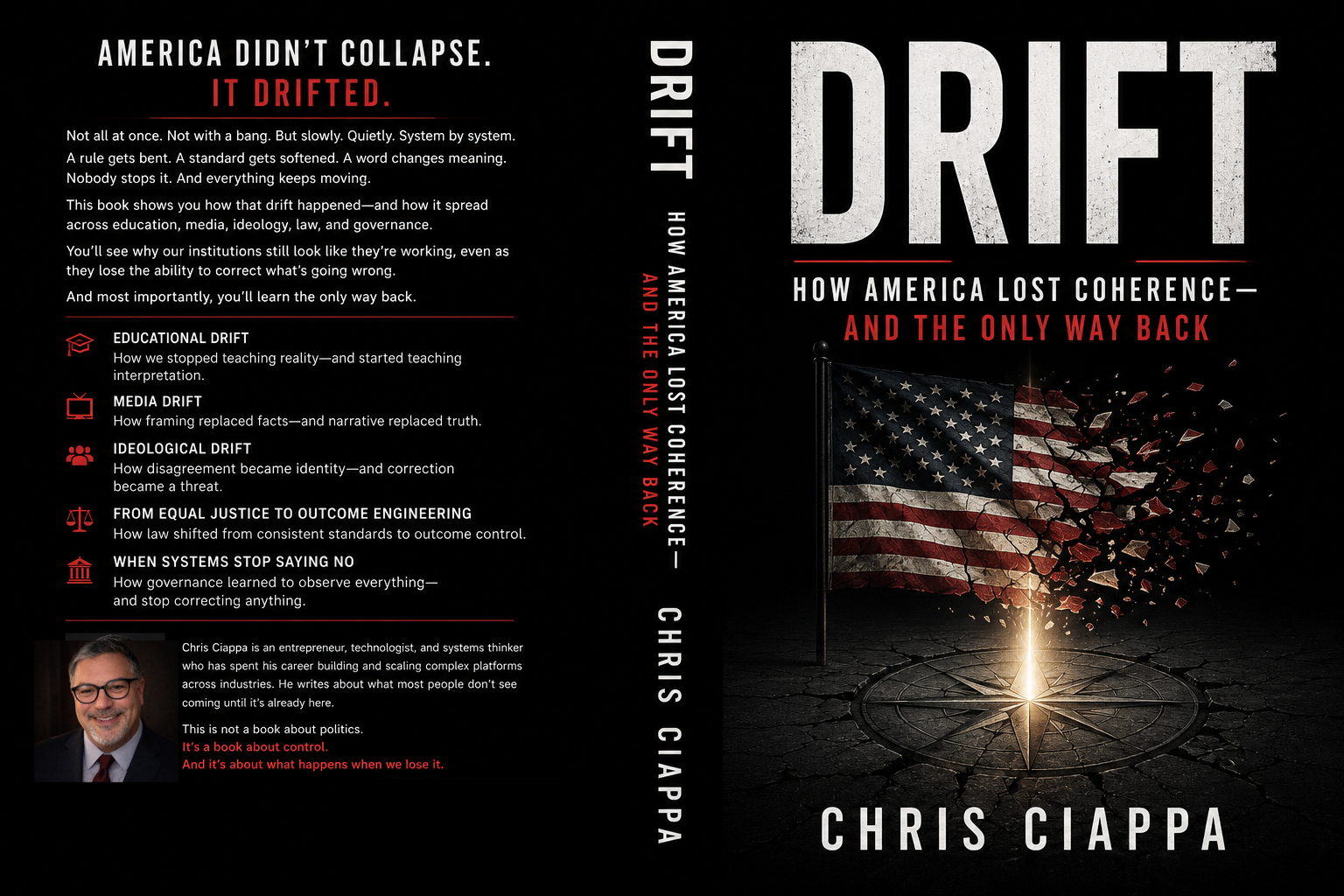
DRIFT: How America Lost Coherence — And The Only Way Back by Chris Ciappa Most discussions about America’s decline focus on politics, personalities, elections, or outrage.

DRIFT: How America Lost Coherence — And The Only Way Back
by Chris Ciappa

Most discussions about America’s decline focus on politics, personalities, elections, or outrage.

This book argues the problem runs much deeper.

America did not suddenly collapse.

It drifted.

Not all at once.
Not through one law, one election, or one movement.
But slowly, system by system, institution by institution, until the country gradually lost the ability to consistently correct itself.

In DRIFT, I examine how this process spread across education, media, law, governance, technology, and culture — and why many institutions still appear functional even while their underlying coherence continues deteriorating.

This is not a book about partisan politics.

It is a book about systems, consequence, coherence, drift, and correction.

Available now on Amazon.
https://a.co/d/0gZnJ3Ko

Continue reading

Related work

Browse all →
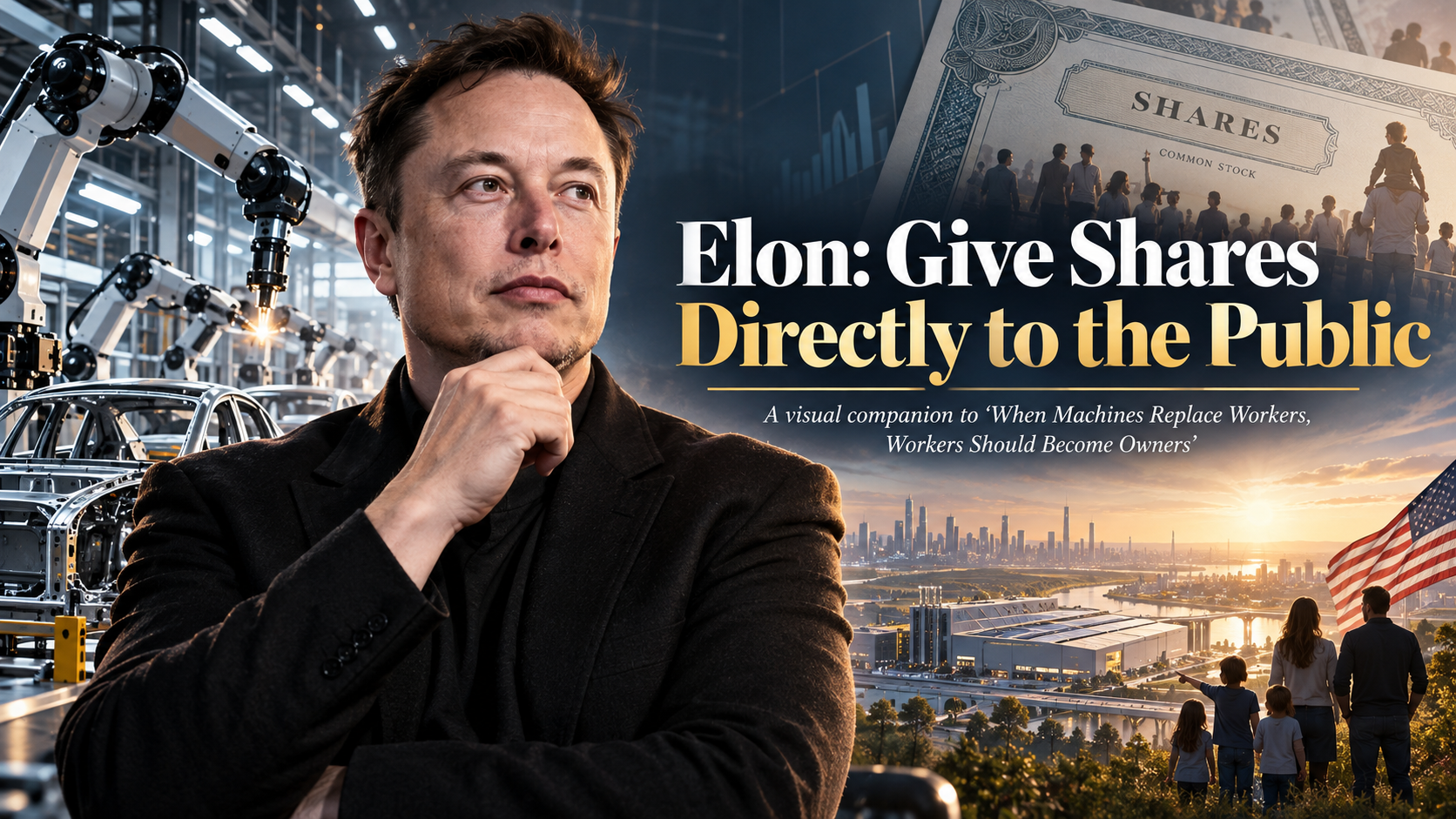
Elon Musk pictured alongside industrial robotics, stock ownership imagery, and American families, illustrating the shift from human labor toward broad-based capital ownership in an automated economy.

When Machines Replace Workers, Workers Should Become Owners

As artificial intelligence, robotics, and automation replace human labor, millions of workers risk losing their economic independence while the companies deploying those technologies continue benefiting from increased productivity. What if displaced workers became owners of the capital replacing their labor instead of depending on universal basic income? I examine a different approach to automation, income replacement, productive ownership, and the future of economic participation.

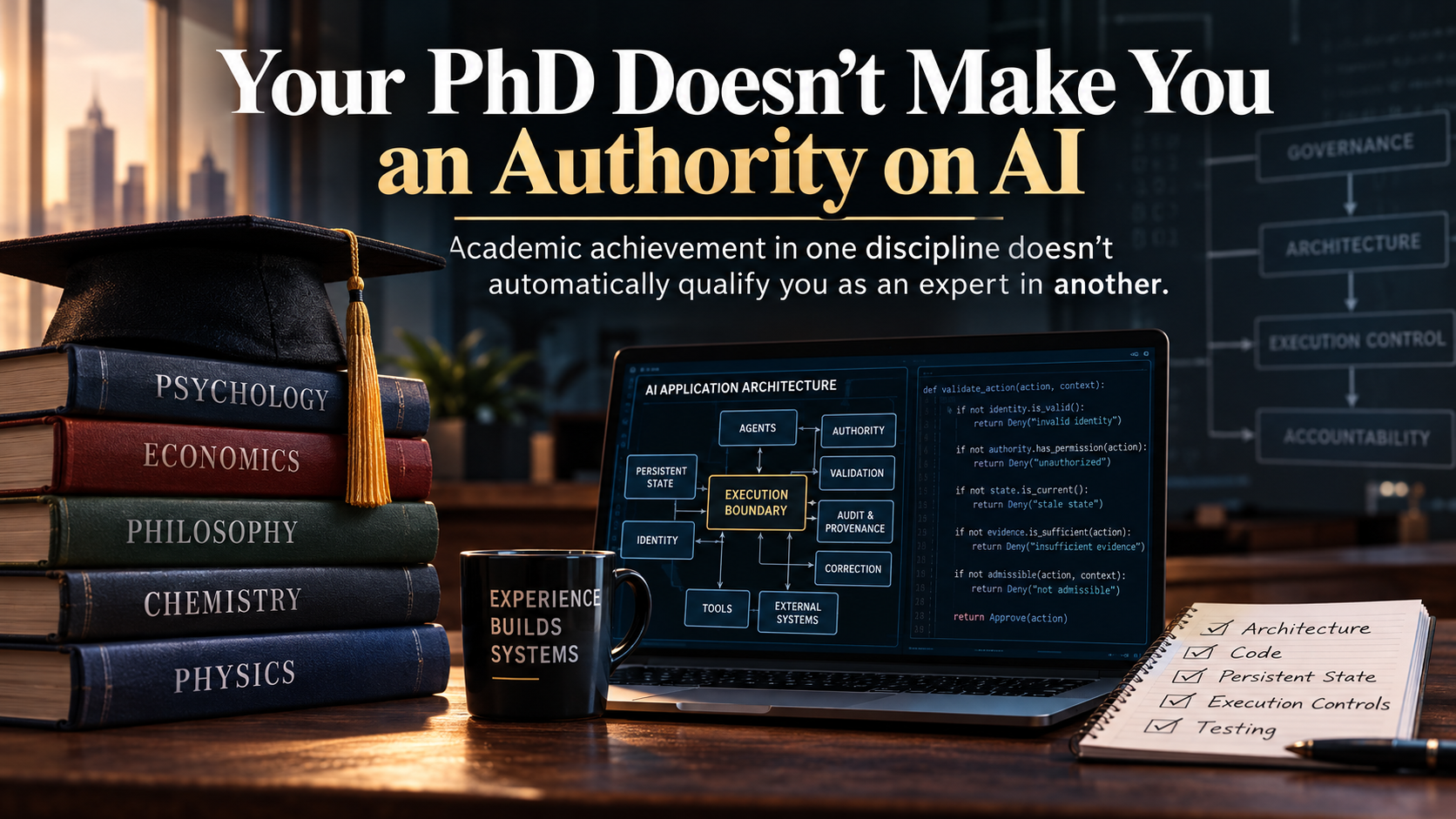
Your PhD Doesn't Make You an Authority on AI

Your PhD Doesn't Make You an Authority on AI

A PhD represents advanced knowledge in a particular discipline, but it doesn't automatically confer expertise in AI systems engineering. We examine the growing tendency to mistake academic credentials for architectural competence, particularly among those making authoritative claims about systems they've never designed, built, or examined. Understanding AI models is one thing. Understanding the architecture that makes them operate is quite another.

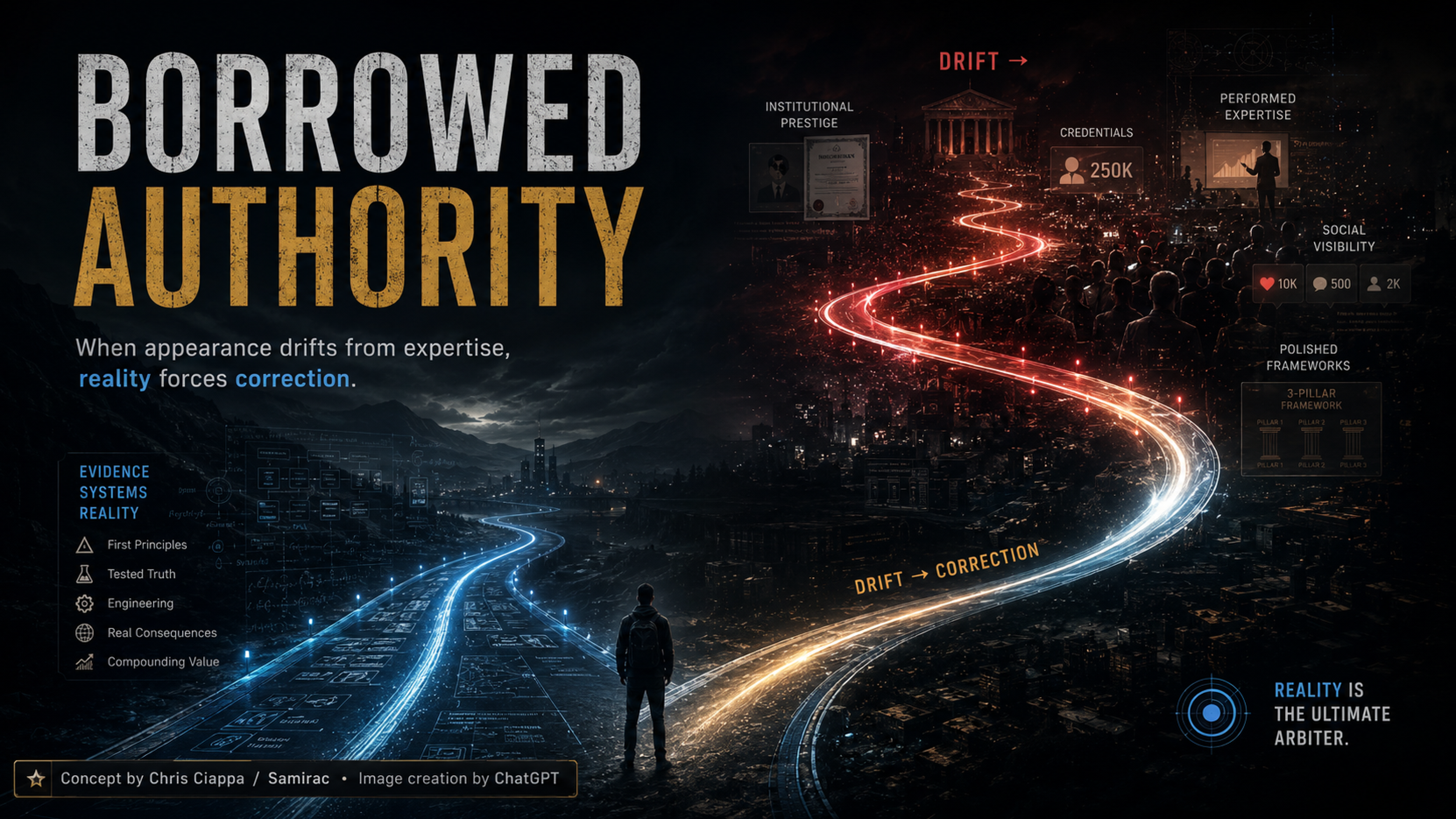
Authority Recognition Drift

We Taught People to Perform Expertise — AI Made It Scalable

AI did not create the borrowed-authority problem. We spent decades building a culture that increasingly rewarded credentials, institutional prestige, titles, language, and visibility as substitutes for demonstrated understanding. Social media monetized that behavior, and generative AI made the performance of expertise almost free. As AI systems gain real authority, the difference between sounding knowledgeable and actually understanding the architecture becomes much harder—and much more important—to ignore.